Program
Tickets will be available from March 13, 3pm. We encourage you to book them in advance of the events. This way we can stay in touch in case of updates or changes to the program. All events are free, although spots are limited.
WEDNESDAY April 15, 2026, 12-2pm
Time: 12-2pm
Place: GSD Gund Hall, Room 124, 48 Quincy St, Cambridge, MA 02138
Open event, snacks and coffee will be served
in partnership with

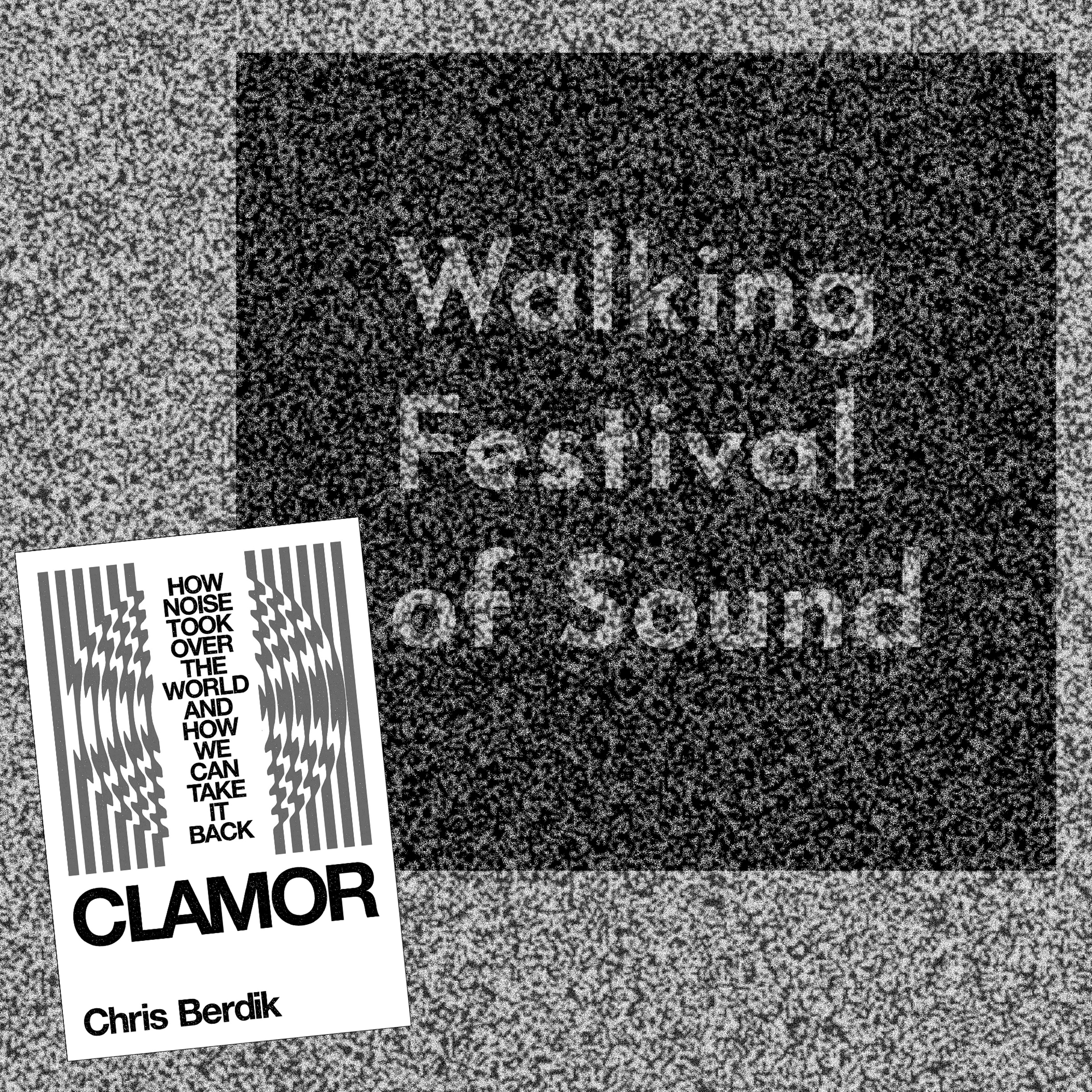
Walking Festival of Sound / Opening Panel
This gathering of Loeb fellows, designers, students, GSD faculty and invited guests serves to introduce the festival's program
and collectively discuss some of the thematic areas and interests around sound and spatial practices that will be explored through various activities, walks and listening sessions
during the festival. Among invited guests, the audience will get to meet and hear from Chris Berdik, a writer, journalist and author of
"Clamor: How Noise Took Over the World and How We Can Take It Back" (W. W. Norton & Company, 2025). Together, we will debate the importance of building soundscape awareness
among students, professional and public audiences and communities. How can we better listen to our cities and, perhaps more importantly, how can cities better listen to their
inhabitants, human and other-than-human?
Chris Berdik is a freelance science journalist, and a former staff editor at The Atlantic and Mother Jones. His stories have appeared in the Boston Globe, The Washington Post, Salon, the Daily Beast, and New Scientist, among other publications. His radio and multimedia pieces have been featured on Smithsonian.com, WBUR (Boston's National Public Radio affiliate), and Sciencestage.com.
Chris's stories often explore the intersection of science with law or ethics. Over the years, he has covered an eclectic mix of topics ranging from personal genomics to nuclear whistleblowers to climate engineering. He wrote about the placebo effect (including its non-medical manifestations) for his first book, Mind Over Mind: The Surprising Power of Expectations, which was published by Current, an imprint of Penguin, in 2012.
He has a BA in history and literature from Harvard, an MA in journalism from Stanford, and he received
a fellowship from the Institute for Journalism and Natural Resources in 2000.
www.chrisberdik.com
Loeb Fellowship, based at the Harvard Graduate School of Design (GSD), offers mid-career professionals a year of
transformation and engagement at Harvard University, along with membership in a global network of over 450 alums.
Loeb Fellows are experienced practitioners who are shaping the built and natural environment in the U.S. and around the world.
Urban planners and designers, public artists, real estate developers, landscape architects, journalists, civic leaders, architects,
policymakers, social entrepreneurs, and more, these proven leaders step away from their professional lives for one academic
year to strengthen their knowledge and impact, to broaden or refocus their careers, and to encourage deeper social engagement with their work.
Loeb Fellowship
FRIDAY April 17, 2026, 7:28 (sunset)-10pm
Start: 7:28pm (sunset)-10pm,
Meeting Point: Stairs at Boston Public Library, 700 Boylston Street, Copley Square, Boston, MA 02116
BOOK YOUR FREE TICKET
Consider also joining
the Meeting Point event with Garnette Cadogan and Julie Shapiro on April 23.
Night Echoes: Nocturnal Explorations of the Moon-Blued Streets / Garnette Cadogan
"Flintlike, her feet struck
such a racket of echoes from the steely street,
tacking in moon-blued crooks from the black
stone-built town, that she heard the quick air ignite
its tinder and shake"
from Night Walk, Sylvia Plath
Join us on the moon-hued streets as we walk from Boston to Cambridge, exploring the variegated terrain, textures, and moods of the paths, streets, and sidewalks underfoot. We'll bring our full sensorium to explore the ground and the buildings and adjoining water, allowing the refracting sounds of the night to add to the music of our voices and steps. We'll walk, talk, laugh, and linger together as we warm to the thrill of nightwalking and its "racket of echoes."
Garnette Cadogan is the Tunney Lee Distinguished Lecturer in Urbanism at the School of Architecture and Planning at MIT.
His work explores the promise and perils of urban life, the vitality and inequality of cities,
and the beauty and challenges of the public realm. The editor-at-large for Nonstop Metropolis: A New York City Atlas
(co-edited by Rebecca Solnit and Joshua Jelly-Schapiro), he writes about urbanism, culture, and
the arts for various publications, and is currently at work on a book on walking and the everyday life of cities.
Garnette has also served as an advisor to the Walking Festival of Sound this year and
is renowned for his courses and local walking club (co-led with
Nicholas Brown)
that brings together diverse groups to explore Boston, Cambridge, and other places nearby and far away.
https://dusp.mit.edu/people/garnette-cadogan/
SUNDAY April 19, 2026 (MOVED TO APRIL 26)
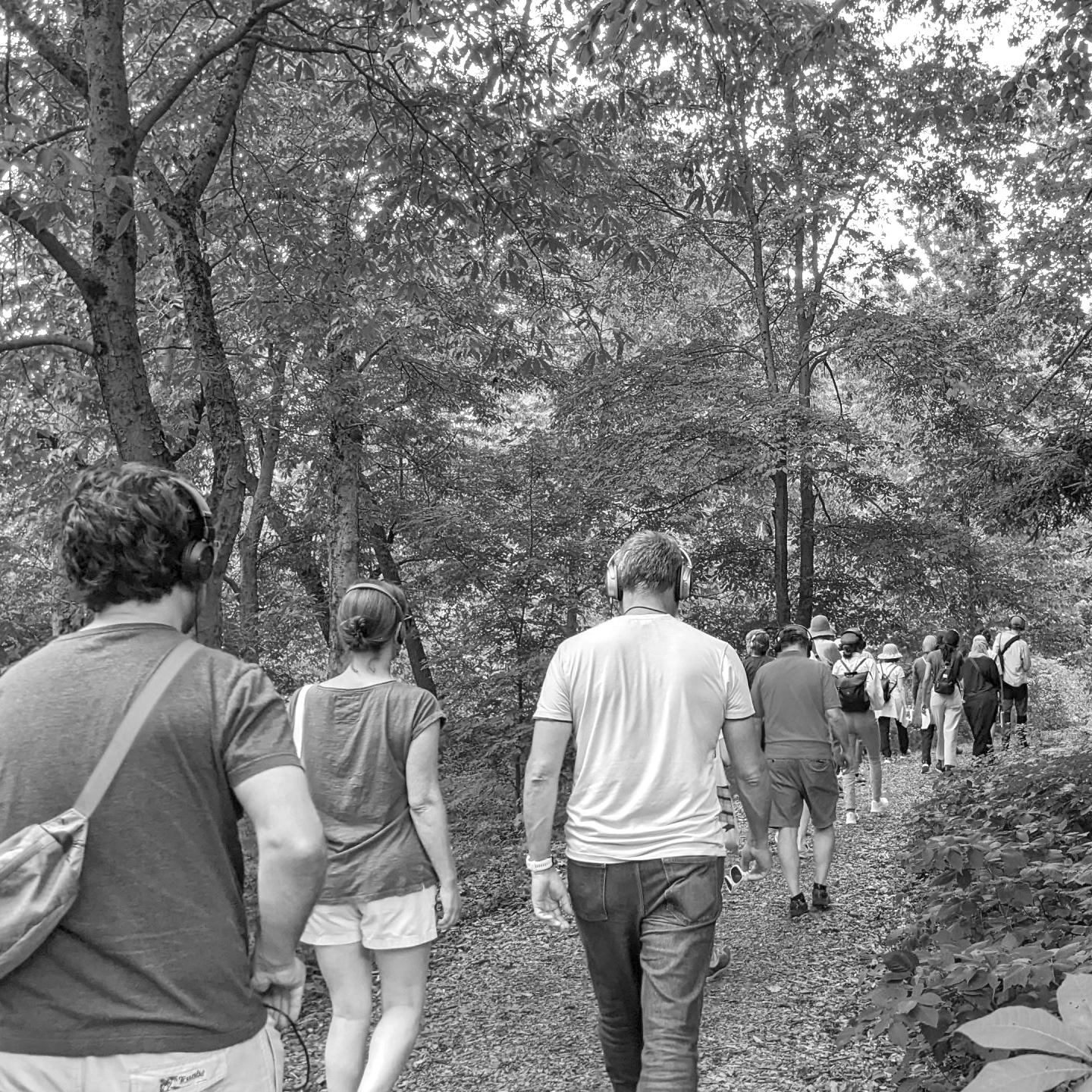
Time: 10am-12pm and 2pm-4pm
Place: Hunnewell Lecture Hall, Harvard Arboretum, 125 Arborway, Boston, MA 02130
image credits: Virginia Wang
BOOK YOUR FREE TICKET:
10am walk
FULLY BOOKED
2pm walk
FULLY BOOKED
in partnership with The Arnold Arboretum of Harvard University
Nature Amplified: The Secret Sounds of Trees /
Jacek Smolicki
If human hearing were a hundred times more sensitive, the sounds produced by trees themselves might become perceptible: water moving through trunks and branches, the creaking of wood in the wind, and the subtle movements of small creatures within bark, cavities, or the canopy. It might even be possible to hear how plants receive and respond to sound waves generated by other beings.
While human ears cannot detect such faint vibrations, specialized microphones and recording systems make it possible to access some of these hidden sonic processes. In this session, artist, researcher, and Harvard Graduate School of Design fellow Jacek Smolicki introduces a set of microphones designed to capture subtle environmental vibrations. Following a brief indoor introduction to the technology, participants take part in a short walk outdoors, using the microphones to listen to amplified sounds within the surrounding landscape.
Participants will use headphones during the walk. Bringing personal wired, over-ear headphones is encouraged, although headphones will also be provided.
Jacek Smolicki is an interdisciplinary artist, designer, and researcher whose work explores the critical, existential, and technological dimensions of listening,
recording, and archiving across human and more-than-human contexts. His practice encompasses soundwalks, soundscape compositions, experimental archives,
and installations, which have been presented internationally at venues such as Ars Electronica, Sonorities, and In-Sonora.
He co-founded the Walking Festival of Sound, a nomadic platform that connects artists, researchers, and local communities
around the role of sound in shaping our environments. Smolicki has published widely on the ethics,
politics, and poetics of listening and recording technologies and in 2018 earned his PhD from Malmö University. He has since held research
positions at Simon Fraser and Uppsala Universities. He is the editor of Soundwalking. Through Time, Space, and Technologies (Routledge, 2023)
and co-editor of Relational Technologies (forthcoming 2026). He is 2026 Loeb Fellow and ArtLab Fellow at Harvard Graduate School of Design.
smolicki.com
MONDAY April 20-27 (with finissage event on April 27, 1:30pm)
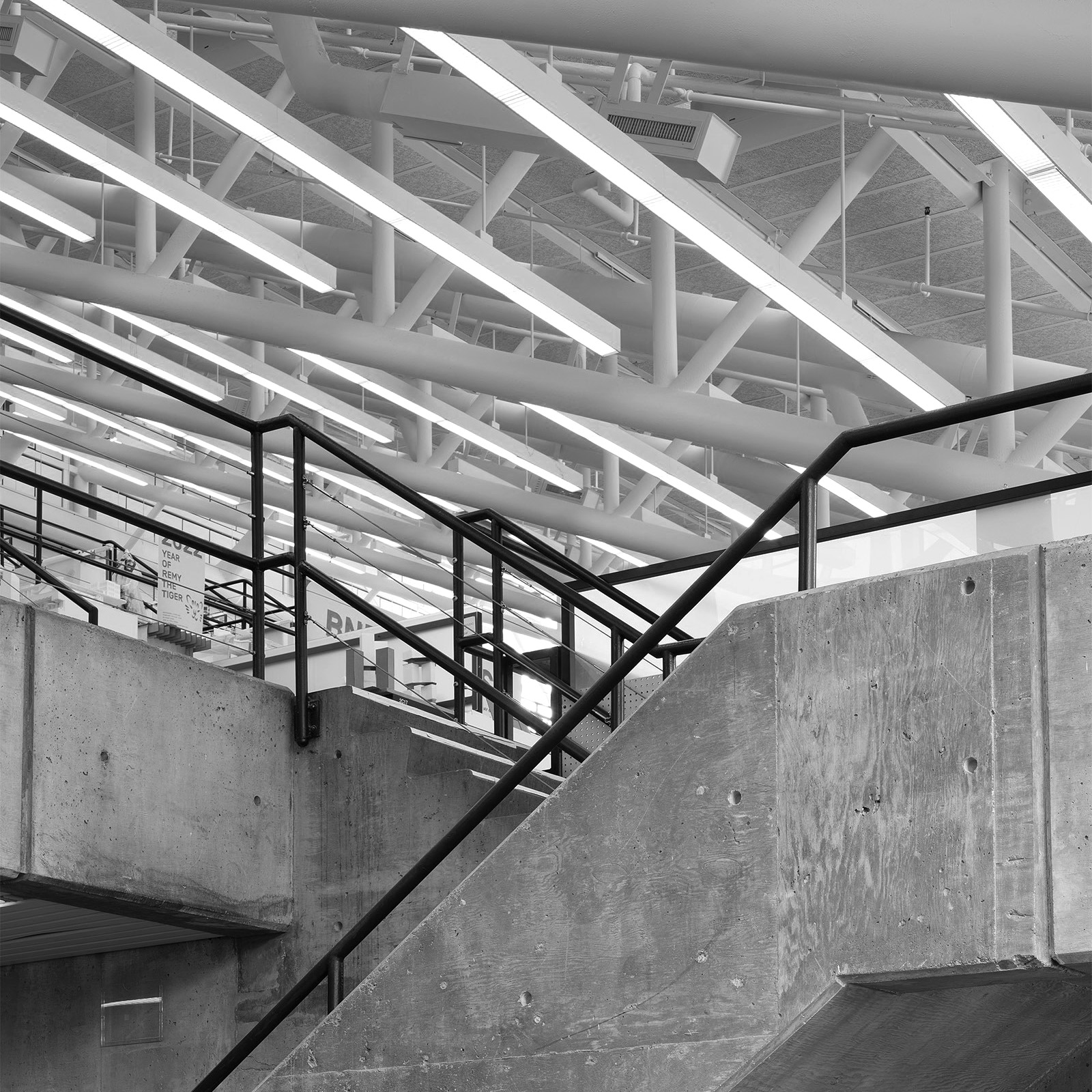
Time: April 20, 3pm through April 27, 2:30pm, 24/7 access, with finissage event on April 27, 1:30pm
Place: Chauhaus (1st floor) / Mezzanine (2nd floor), Harvard GSD, Gund Hall, 48 Quincy Street, Cambridge
image credits: Noritaka Minami
Click here for the exposition of students' works and their written reflections
Drawing Soundscapes / Gund Hall
This exhibition, visible from both the Chauhaus café and a nearby lounge area in Gund Hall,
is part of an elective class at the Harvard University Graduate School of Design, "Drawing Space / Marking Sensation."
The course includes an exercise in translating auditory sensations into abstract compositions, to cultivate acoustical perceptions of space;
this year, instructor Karen Schiff collaborated with visiting Loeb Fellow Jacek Smolicki to create a larger "sound drawing" project
that could be part of this Festival. Students from many GSD degree programs used marks to represent their auditory experiences
of various spaces in the school's main building. This project invites students – and viewers of the exhibition – to perceive overlooked
(or underheard) qualities in this architecturally legendary place. (A QR code mounted next to the drawings enables viewers to find
more information online: students reveal the locations that inspired their drawings,
and report on their compositional strategies.)
Karen Schiff is an artist, writer, editor, and researcher who created the "Drawing Space / Marking Sensation" syllabus for the GSD, to cultivate embodied spatial perception in a digital age. Schiff's recent solo exhibition in Houston, BORDERLINES (Ellis Island), explored the mythology of American welcome through rubbings of floors and maps at Ellis Island, putting exhibition visitors "in touch" with this primary symbol of U.S. immigration. Like the drawings in Soundscapes / Gund Hall, these artworks invited visitors to activate their own sensory imaginations. Schiff transformed one 17-sq.-ft. rubbing, of the cracked concrete slabs just inside Ellis Island's main entrance, into a room-sized "carpet" so that visitors could walk onto this historically charged surface and kinesthetically inhabit the dynamics of a border zone.
https://www.karen-schiff.com/
TUESDAY April 21, 6:30-9pm
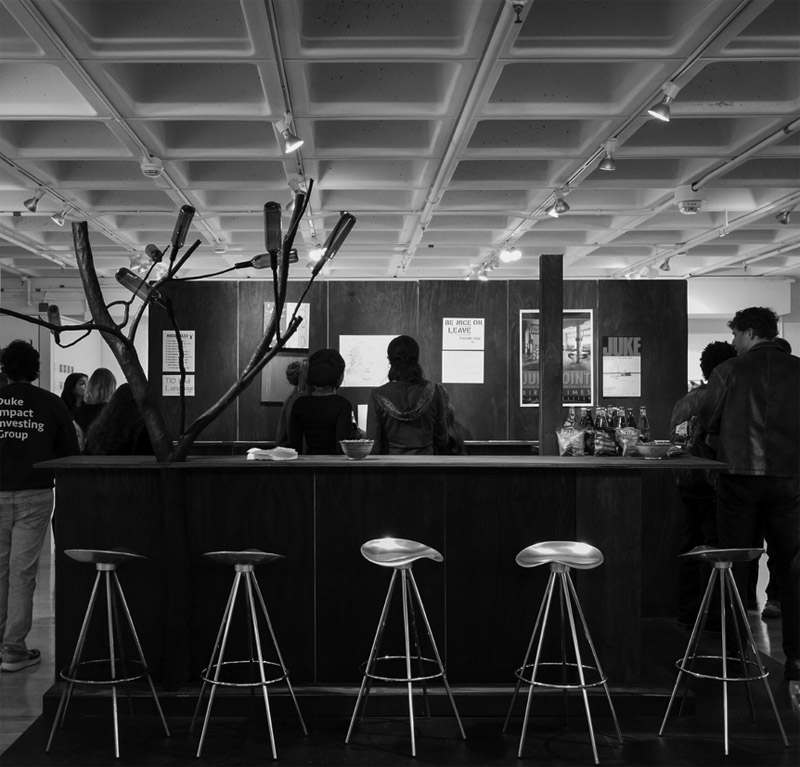
Time: April 21, 6:30-9pm
Place: Wiesner Student Art Gallery, Stratton Student, MIT, W20 Room 209, 84 Massachusetts Avenue, Cambridge, MA
Drop in
Juke Joints / C Jacob Payne
Juke joints were informal gathering spaces built by African American communities across the rural South during the era of Jim Crow segregation. Often constructed without formal plans or permits, these buildings became vital centers of music, food, and community life. This exhibition reconstructs several juke joints through drawings, scale models, and installation developed from photographs and field research. By translating fragmentary historical evidence into spatial form, the project reexamines these overlooked environments as works of architecture and cultural memory
C Jacob Payne is a designer and researcher working across fabrication, interaction, and spatial design. He studied architecture and environmental studies at Yale and is currently completing his Master of Architecture at MIT.
His work develops new approaches to architectural representation as a form of historical inquiry, with a focus on Black architectural heritage. He explores how incomplete archives can be reconstructed through new representation modes to make gaps legible rather than resolved.
https://architecture.mit.edu/people/c-jacob-payne
WEDNESDAY April 22, 2026, 6:30-8pm
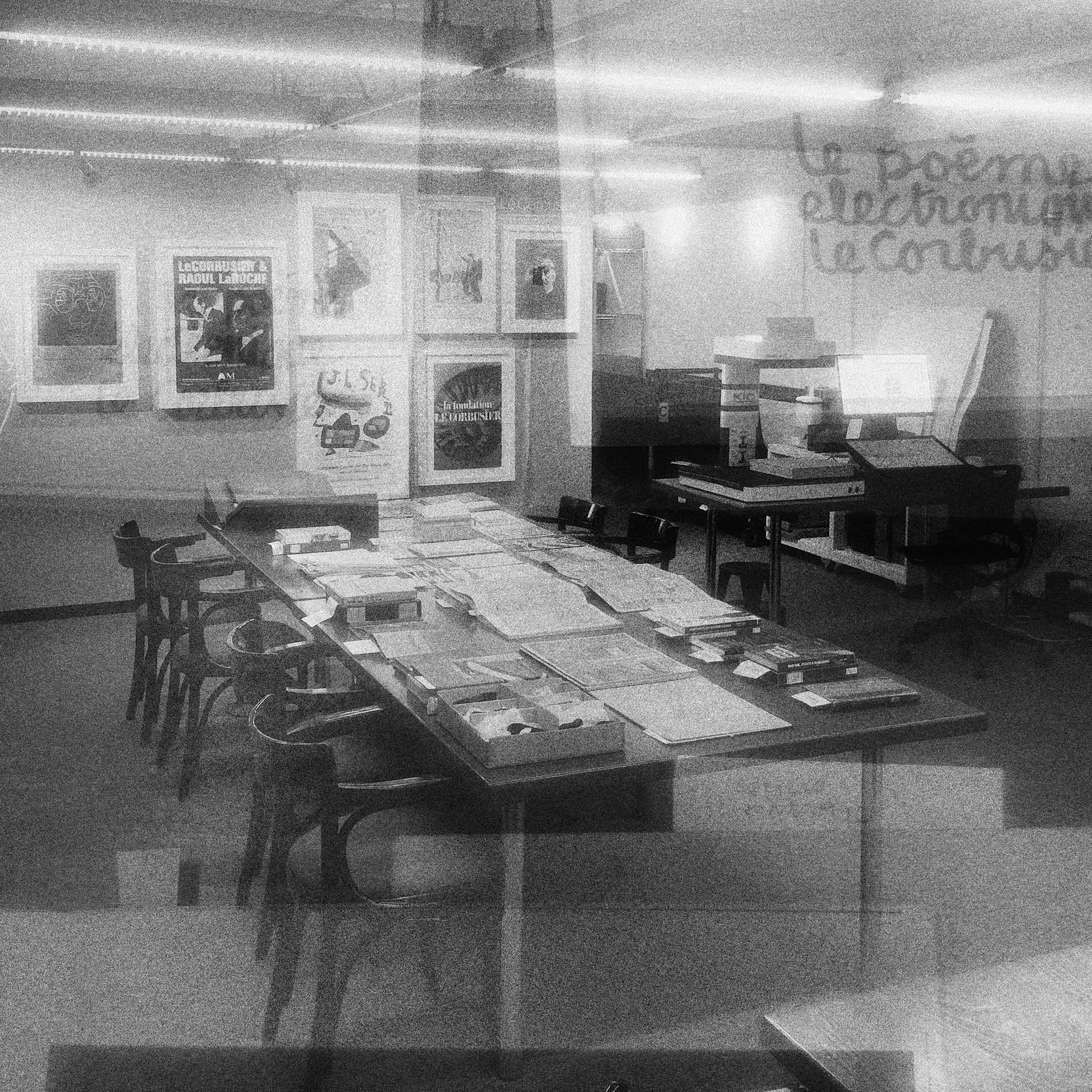
Time: 6:30-8pm
Place: Frances Loeb Library, GSD, Gund Hall, 48 Quincy St, Cambridge, MA 02138
BOOK YOUR FREE TICKET (available from April 20/limited space)
in partnership with Frances Loeb Library
Archive Party #24: SOUNDSCAPES / Frances Loeb Library
This event will focus on the selection of rare books and materials from Frances Loeb Library that focus on sound, acoustics, architecture and spatial practices.
Archive Parties at the Harvard Graduate School of Design (GSD) are recurring, curator-led gatherings in the Frances Loeb Library Special Collections that showcase rare design materials,
such as sketches, journals, and photographs. These interactive, small-group events allow students and faculty to engage directly with historical artifacts, covering themes like student journals, Black designers, and women in design.
Simultaneously, throughout the period of the festival, the Frances Loeb Library will host an exhibition of books from its collection that revolve around the subjects of sound, soundscapes, acoustics, spatial design, architecture, and the environment.
Frances Loeb Library is a vibrant intellectual hub of the Harvard Graduate School of Design.
Its expert staff supports the global design community's diverse needs through many services.
The library provides equitable access to a comprehensive collection of resources, including 16th century architectural treatises,
the Le Corbusier Research Collection, the tactile Materials Collection, rich archival collections,
and a vast general collection of design books and periodicals. The library provides support for research, teaching, writing, and GIS & geospatial needs.
THURSDAY April 23, 2026, 11:30am-12:30pm

Start: 11:30am-12:30pm, with a feedback session afterwards
Place: Harvard Art Museum, 32 Quincy St, Cambridge, MA 02138
BOOK YOUR FREE TICKET
YIELD! ONE WAY! STOP! / Brett Ascarelli
Instructions surround us. Signs vie for our attention and demand that we follow them, but we've seen them thousands of times; they are often so mundane that we don't notice them. If we insist on paying attention to them, what can we discover together? In this walk, we playfully explore the instructions we find around us, and we subject this nearly invisible aspect of our everyday lives to a creative gesture.
Brett Ascarelli is a PhD candidate at Stockholm University of the Arts.
Her research interests include instructions, creativity and storytelling.
She has a background in audio documentary and public service radio journalism.
She often catches herself writing in simple sentences, because that is what one
learns to do when writing for the ear.
Brett Ascarelli's Uniart profile
THURSDAY April 23, 2026, 6-7:30pm
Start: 6-7:30pm
Place: Harvard Artlab, 140 N Harvard St, Boston, MA 02134
BOOK YOUR FREE TICKET
in partnership with

and Arts Thursdays

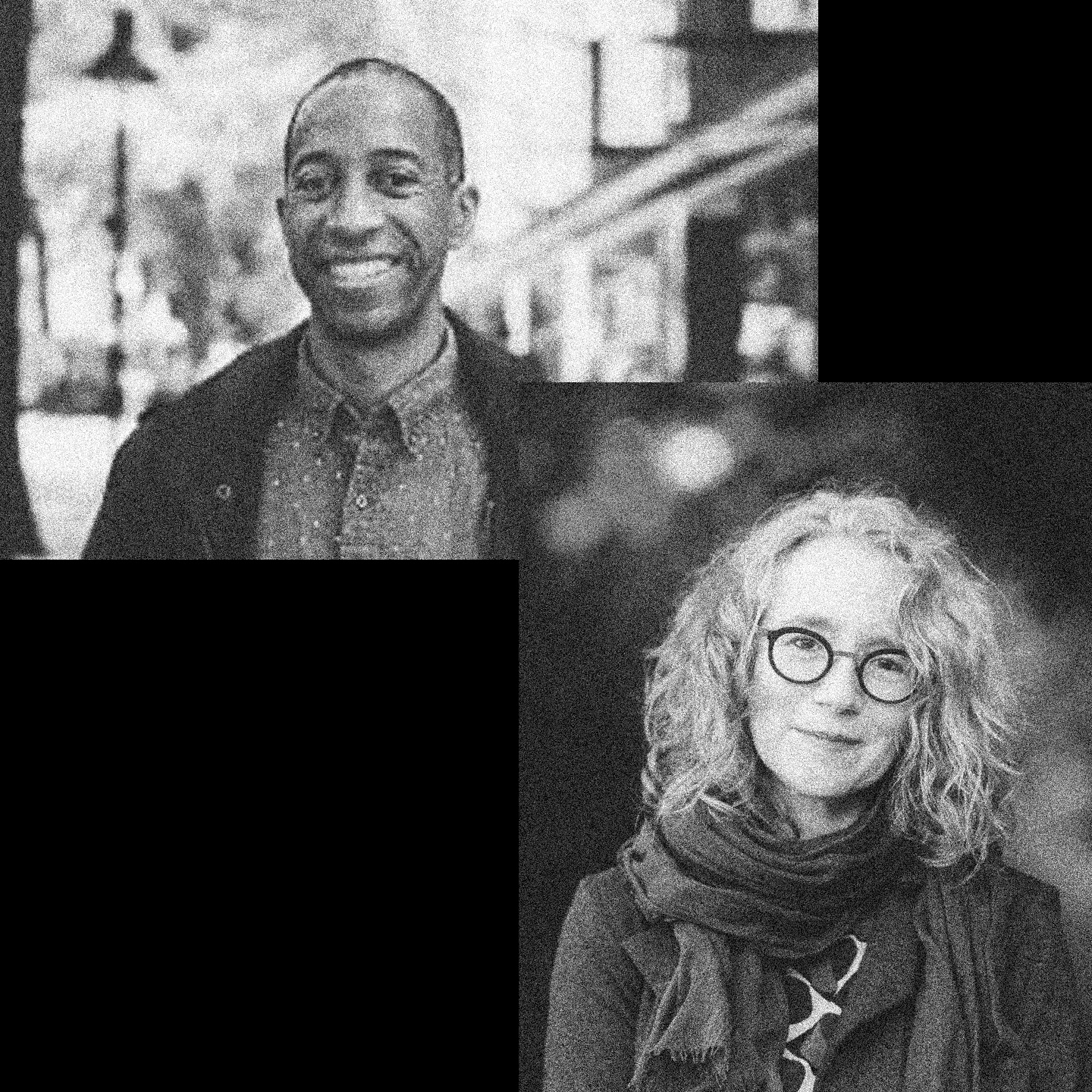
Meeting Point / Garnette Cadogan & Julie Shapiro,
moderated by Jacek Smolicki
Meeting Point is a convening at the midpoint of the festival, hosted by renowned creative scholars of sound-based work and walking, Garnette Cadogan and Julie Shapiro.
This performative dialogue will use several excerpts from the speakers' work as starting points for an exchange of thoughts on the significance of listening—to each other,
to ourselves, and to the world that surrounds us.
Meeting Point will take the form of a partly structured and partly improvised itinerary through the subject of walking and listening,
weaving observations, commentaries, and meditations on questions concerning who shapes our auditory environments and who is excluded from them.
It will also explore how we can become better listeners to our built and natural environments and how, in turn, our habitats,
including our cities, can become better listeners to their citizens.
Garnette Cadogan is the Tunney Lee Distinguished Lecturer in Urbanism at the School of Architecture and Planning at MIT.
His work explores the promise and perils of urban life, the vitality and inequality of cities,
and the beauty and challenges of the public realm. The editor-at-large for Nonstop Metropolis: A New York City Atlas
(co-edited by Rebecca Solnit and Joshua Jelly-Schapiro), he writes about urbanism, culture, and
the arts for various publications, and is currently at work on a book on walking and the everyday life of cities.
Garnette has also served as an advisor to the Walking Festival of Sound this year and
is renowned for his courses and local walking club (co-led with
Nicholas Brown)
that brings together diverse groups to explore Boston, Cambridge, and other places nearby and far away.
https://dusp.mit.edu/people/garnette-cadogan/
Julie Shapiro is a career listener, longtime champion of audio, community builder, and cultivator of sound and story. She co-founded Audio Flux in 2023 and is currently developing a narrative podcast about pancreatic cancer. In the past decade, Julie has served as an Executive Producer with Canadaland, PRX, and Radiotopia, including for the Ear Hustle and Radiotopia Presents podcasts. From 2014–2015, Julie helped found and manage the ABC's Creative Audio Unit. In 2000, she co-founded the Third Coast International Audio Festival, where, as Artistic Director, she nurtured a robust international listening culture. Shapiro has taught radio to university students, presented at conferences and festivals worldwide, and produced stories for the airwaves and podcasts in the US and beyond. Visit Julie Shapiro's website for more information.
https://www.julieshapiro.org/
FRIDAY April 24, 2026, 3-4pm
Returning the Ear / Tim Shaw and Jacek Smolicki
Returning the Ear is an ongoing collaborative project that explores urban and rural environments through soundwalking, field recording, and sonic interventions. The project challenges the visual dominance in how places are typically understood by foregrounding listening as a creative and generative mode of engaging with the world.
Combining attentive soundwalking, field recordings—including electromagnetic signals—and DIY technologies, the project develops experimental methods for sensing, mapping, and documenting environments through sound. Public soundwalks, often silent or lightly guided, have taken place in cities such as Newcastle, Stockholm, and Barcelona. These walks frequently culminate in live performances or sound installations that recompose and remediate the collected sound material.
Through these activities, Returning the Ear cultivates a deeper, responsive form of listening that draws attention to the sonic textures and subtle dynamics of everyday environments. Positioned as a post-digital practice, it blends analogue and digital techniques to explore the entanglements between human and other-than-human worlds.
Tim Shaw is an artist and researcher working with sound, light, and communication media to create performances, installations, and site-responsive interventions. His practice engages environmental sound art, digital media, media archaeology, walking practices, and experimental instrument building.
His projects explore hidden forms of communication in the environment, including insect sound worlds, augmented soundwalks, high-voltage instruments, radio transmissions through trees, and musical material extracted from rocks. Shaw's work is presented internationally at festivals and in diverse locations—from forests, caves, and mountains to museums and galleries.
He has collaborated with artists including Chris Watson and Phill Niblock. In 2026 he will be a Forum Basiliense Fellow at University of Basel and will lead the Meteorological Media Spark project at Zurich University of the Arts.
https://tim-shaw.info/
Jacek Smolicki is an interdisciplinary artist, designer, and researcher exploring the critical, existential,
and technological dimensions of listening, recording, and archiving across human and more-than-human contexts.
His work includes soundwalks, soundscape compositions, experimental archives, and installations presented internationally
at festivals and venues such as Ars Electronica, Sonorities, and In-Sonora. He co-founded the Walking Festival of Sound,
a nomadic platform connecting artists, researchers, and communities through shared listening practices.
Smolicki earned his PhD from Malmö University in 2018 and has held research positions at Simon Fraser University and Uppsala University. He edited Soundwalking: Through Time, Space, and Technologies (Routledge, 2023) and co-edits Relational Technologies (forthcoming 2026). In 2026 he is a Loeb Fellowship and ArtLab at Harvard University Fellow.
https://www.smolicki.com/
FRIDAY April 24, 2026, 4:30-6pm
Time: 4:30-6pm
Place: Shelemay Sound Lab, Harvard Music Department, 3 Oxford St
BOOK YOUR FREE TICKET
in partnership with Shelemay Sound Lab
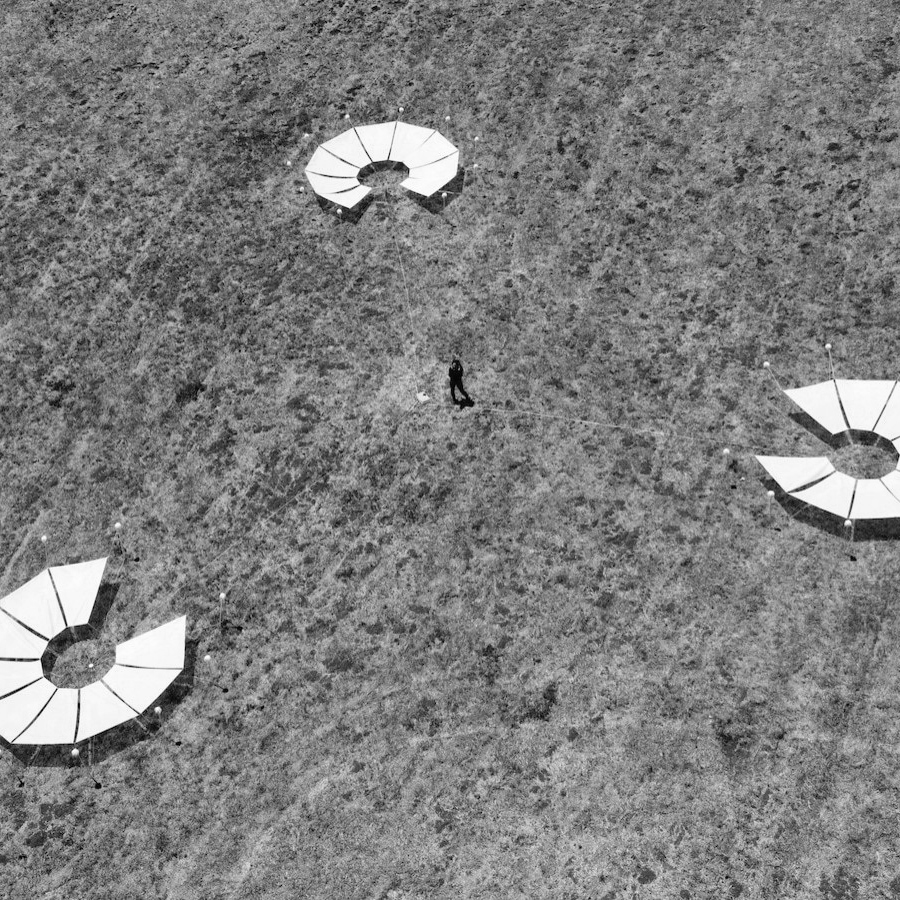
Infrasound and the Planetary Imaginary / Brian House
Even though you can't hear it, infrasound fills the air. And because the atmosphere doesn't absorb it as readily as regular sound, infrasound comes from hundreds, if not thousands, of miles away. If humans could perceive frequencies lower than 20 Hz, then changing ocean currents, wildfires, turbines, receding glaciers, industrial HVACs, superstorms, and other geophysical and anthropogenic entanglements taking place across the globe would shape our imagination of the planet's very nature.
In my research, I've developed infrasonic "macrophones" to make infrasound audible. Comprising wind-noise reduction arrays leading to microbarometers and using custom signal processing, I've appropriated the basic technique from what the Comprehensive Nuclear Test Ban Treaty Organization uses to detect distant warhead tests. In this case, however, we're listening to a planet in transition. Unlike with a scientific endeavor, it's not a matter of extending the horizon of human knowledge. Instead, it's about encountering agencies greater than our own that connect us through the atmosphere, an experience that is both poetic and political.
Spatialized presentation of infrasonic field recordings to follow.
Brian House is an artist who investigates the rhythms of human and nonhuman systems. Through sound, subversive technology, and multidisciplinary research, he makes our interdependencies audible in order to imagine new political realities. House is a Creative Capital awardee and has exhibited at MoMA, Los Angeles MOCA, Ars Electronica, and the Brooklyn Botanic Garden, among other venues. The New York Times Magazine, The Wire, and TIME's annual "Best Inventions" issue have featured his work, and his research has been published in Leonardo, Journal of Sonic Studies, Media Art Study and Theory, and e-flux Architecture. His latest album, Everyday Infrasound in an Uncertain World, is available from Gruenrekorder. House holds a PhD in computer music from Brown University and was Associate Scholar at Columbia University's Center for Spatial Research. He is currently Assistant Professor of Art at Amherst College.
https://brianhouse.net
SATURDAY April 25, 2026, 9-11am
Time: 9-11am
Place: Harvard Arboretum, 125 Arborway, Boston, MA 02130
Drop-in event
in partnership with The Arnold Arboretum of Harvard University
Soundscapes of the Arboretum: A Drop-in Event /
Amanda McCluskey, Isabella Febbroriello, Jacek Smolicki
Stop by the Hunnewell lawn to experience the sounds of the Arboretum in a new way.
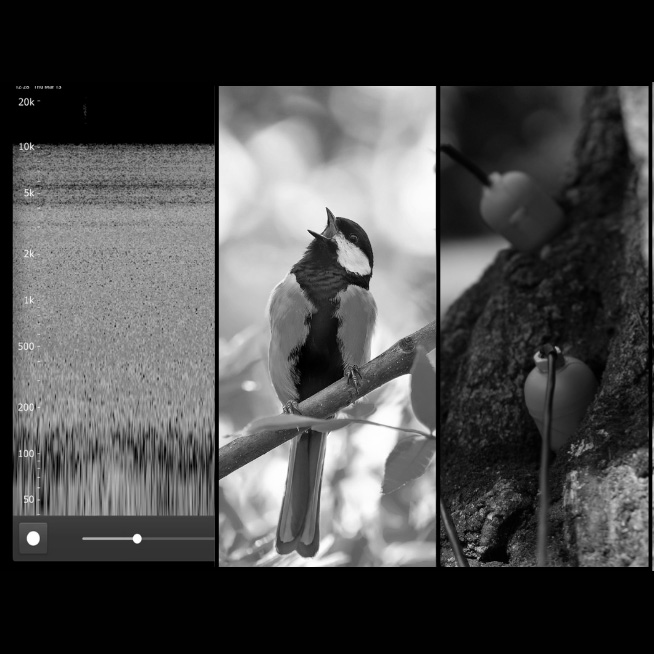
View the sound of wind or birdsong through special spectrograms; participate in a "sound to sketch activity"
to draw what you're hearing with a friend or family member; work with a birder to learn how to identify birds from their unique calls;
and listen to the sounds of a tree or soil amplified through specially designed microphones.
Amanda McCluskey and Isabella Febbroriello are recent MassArt graduates with degrees from the Studio for Interrelated Media.
They contribute to outreach for Sound Travels, an educational research project about sound and learning in informal environments.
Jacek Smolicki is an interdisciplinary artist, designer and researcher and a Loeb Fellow 2026 at the Harvard Graduate School of Design.
SATURDAY April 25, 2026, 2-6pm
Time: 2-6pm
Place: Holden Chapel, Harvard Yard
BOOK YOUR FREE TICKET
in partnership with Shelemay Sound Lab
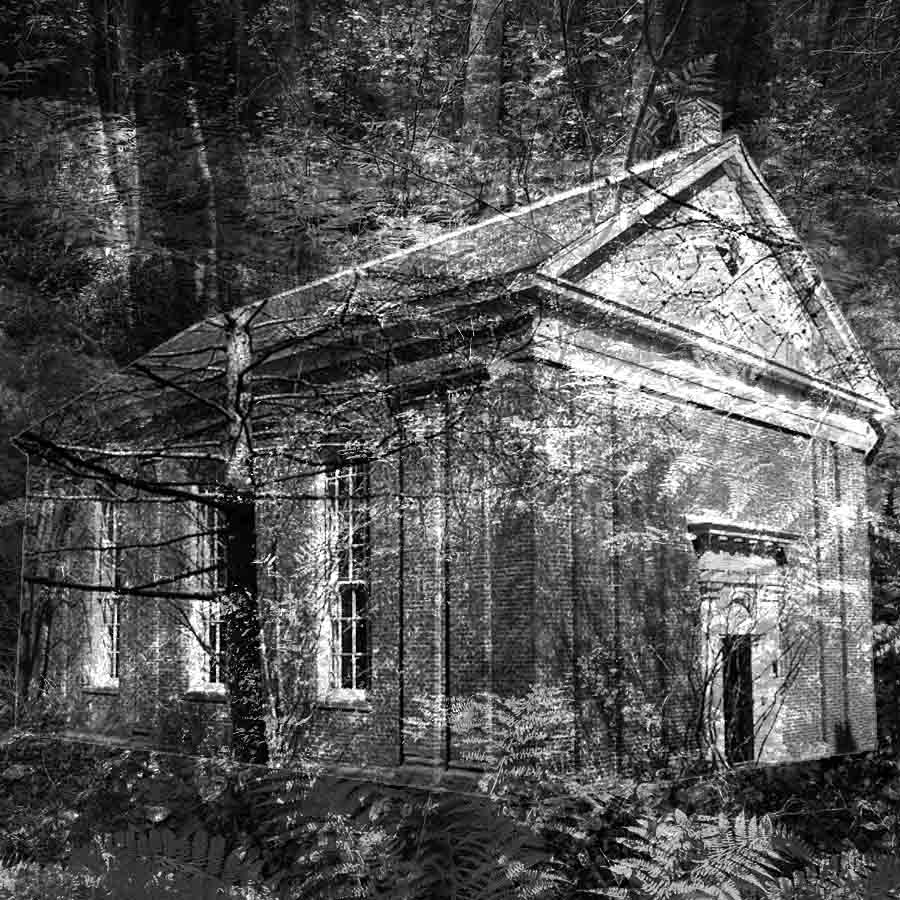
Sanctuary for Environmental Listening
For several hours on the Saturday afternoon of April 25,
Holden Chapel will turn into a sanctuary for environmental listening.
Being one of the oldest buildings in Harvard Yard, since 1744 this space has served many disparate functions, hosting morning and evening prayers and lectures,
and later housing a medical laboratory. Its walls, which have witnessed both contemplation and scientific inquiry,
today provide a unique environment for sonic experiences. On this occasion, the chapel will be filled with compositions
by Music Department students and guest composers who, in their work, draw on environmental recordings. This experience will serve as a reminder that science,
spirituality, nature and human cultures are not separate realms, but
deeply entangled aspects of life at large.
Artists and composers include:
Marisse Cato, Michele Cheng, Maximiliano Soto Mayorga, John Pax, Victor Arul, Seth Torres, and others
Marisse Cato is a London-born composer
and scholar working with theorising contemporaneity, sounding and listening to its paradoxes,
rifts and processes in unassuming coexistence. Currently studying a PhD in Music at Harvard University
with Vijay Iyer and Chaya Czernowin, her practice involves both composing for acoustic instruments and electronics.
Her work is concerned with the practice of being human, negotiating citizenship and nationhood under racialised capitalism.
Her website: www.marissecato.com
Michele Cheng is a composer, multi-instrumentalist, and puppeteer intertwining music, visuals, and theatre. As an artist-scholar, she develops creative work that shines light on underrepresented narratives through critical inquiry, journalistic approach, and intermedia storytelling.
Maximiliano Soto Mayorga is a composer from Santiago, Chile.
With more than 60 premieres in the Americas, Europe and Asia and several international prizes,
he focuses his work on instrumental music, music theater and circus and improvisation pieces for the youth.
John Pax is a musician from the city of Kalamunda, Western Australia who currently lives in Somerville, Massachusetts. As a composer, he writes for acoustic instruments and/or electronics and is deeply concerned with the sounds, nostalgias, and mythologies of his hometown.
Shelemay Sound Lab offers resources for editing, reviewing, and creating multimedia projects in stereo and multi-channel formats. Equipped with modern and legacy audio technology, we support interdisciplinary creativity and diverse engagement with sound. Through workshops, listening events, an artist-in-residence program, and personalized guidance, the lab hopes to enrich Harvard's exploration of music, sound, production, and scholarship.
https://ssl.fas.harvard.edu/
SUNDAY April 26, 2026 (moved from April 19)
Time: 10:30am-12:30pm and 2pm-4pm
Place: Hunnewell Lecture Hall, Harvard Arboretum, 125 Arborway, Boston, MA 02130
image credits: Virginia Wang
BOOK YOUR FREE TICKET:
10:30am walk
FULLY BOOKED
2pm walk
FULLY BOOKED
in partnership with The Arnold Arboretum of Harvard University
Nature Amplified: The Secret Sounds of Trees /
Jacek Smolicki
If human hearing were a hundred times more sensitive, the sounds produced by trees themselves might become perceptible: water moving through trunks and branches, the creaking of wood in the wind, and the subtle movements of small creatures within bark, cavities, or the canopy. It might even be possible to hear how plants receive and respond to sound waves generated by other beings.
While human ears cannot detect such faint vibrations, specialized microphones and recording systems make it possible to access some of these hidden sonic processes. In this session, artist, researcher, and Harvard Graduate School of Design fellow Jacek Smolicki introduces a set of microphones designed to capture subtle environmental vibrations. Following a brief indoor introduction to the technology, participants take part in a short walk outdoors, using the microphones to listen to amplified sounds within the surrounding landscape.
Participants will use headphones during the walk. Bringing personal wired, over-ear headphones is encouraged, although headphones will also be provided.
Jacek Smolicki is an interdisciplinary artist, designer, and researcher whose work explores the critical, existential, and technological dimensions of listening,
recording, and archiving across human and more-than-human contexts. His practice encompasses soundwalks, soundscape compositions, experimental archives,
and installations, which have been presented internationally at venues such as Ars Electronica, Sonorities, and In-Sonora.
He co-founded the Walking Festival of Sound, a nomadic platform that connects artists, researchers, and local communities
around the role of sound in shaping our environments. Smolicki has published widely on the ethics,
politics, and poetics of listening and recording technologies and in 2018 earned his PhD from Malmö University. He has since held research
positions at Simon Fraser and Uppsala Universities. He is the editor of Soundwalking. Through Time, Space, and Technologies (Routledge, 2023)
and co-editor of Relational Technologies (forthcoming 2026). He is 2026 Loeb Fellow and ArtLab Fellow at Harvard Graduate School of Design.
smolicki.com
SUNDAY April 26, 2026, 11am-12pm
Start: 11am-12pm, with a feedback session afterwards
Place: Smith Campus Center, 1350 Massachusetts Ave, Cambridge, MA 02138
BOOK YOUR FREE TICKET
YIELD! ONE WAY! STOP! / Brett Ascarelli
Instructions surround us. Signs vie for our attention and demand that we follow them, but we've seen them thousands of times;
they are often so mundane that we don't notice them. If we insist on paying attention to them, what can we discover together?
In this walk, we playfully explore the instructions we find around us, and we subject this nearly invisible aspect of our everyday lives to a creative gesture.
Brett Ascarelli is a PhD candidate at Stockholm University of the Arts.
Her research interests include instructions, creativity and storytelling.
She has a background in audio documentary and public service radio journalism.
She often catches herself writing in simple sentences, because that is what one
learns to do when writing for the ear.
Brett Ascarelli's Uniarts profile
MONDAY April 27, 3-5pm
Time: April 27, 3-5pm
Place: Harvard Artlab, 140 N Harvard St, Boston, MA 02134
in partnership with
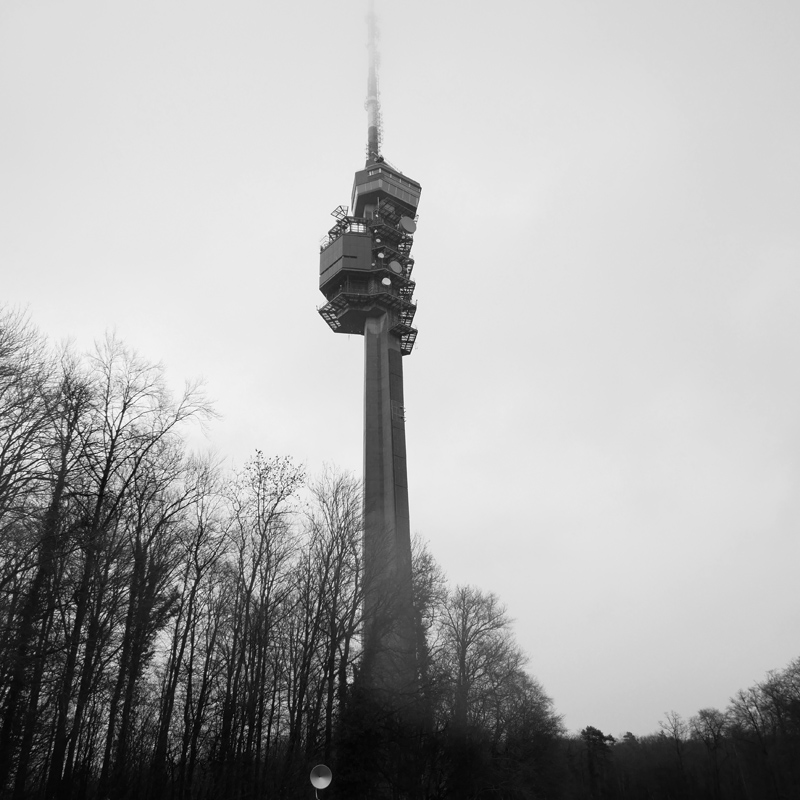
Wireless Drift: Workshop and Soundwalk / Tim Shaw
This workshop and soundwalk focuses on listening to the wireless communication signals that surround us. Using small devices built with cheap ESP32 microcontrollers, participants will explore how Wi-Fi and Bluetooth networks can be sensed and translated directly into sound.
The devices scan nearby wireless traffic and sonify Wi-Fi packets in real time. The method is deliberately simple: packet length is mapped directly to the microcontroller's analog output. As network activity increases, the sound becomes louder, denser and more complex, making the intensity of local wireless communication immediately audible.
After a short introduction and demonstration, participants will take part in a guided walk using the devices. Moving through the city, the group will listen to how the sonic texture of wireless networks changes from place to place, revealing hidden patterns of connectivity and infrastructure.
The workshop was developed through Tim Shaw's fellowship at the Forum Basiliense which investigates the borderscapes between Switzerland, France and Germany. By listening to different regions of the electromagnetic spectrum, the walk offers a way to experience the city through the invisible flows of data that constantly pass through it.
Tim Shaw is an artist and researcher working with sound, light, and communication media to create performances, installations, and site-responsive interventions. His practice engages environmental sound art, digital media, media archaeology, walking practices, and experimental instrument building.
His projects explore hidden forms of communication in the environment, including insect sound worlds, augmented soundwalks, high-voltage instruments, radio transmissions through trees, and musical material extracted from rocks. Shaw's work is presented internationally at festivals and in diverse locations—from forests, caves, and mountains to museums and galleries.
He has collaborated with artists including Chris Watson and Phill Niblock. In 2026 he will be a Forum Basiliense Fellow at University of Basel and will lead the Meteorological Media Spark project at Zurich University of the Arts.
https://tim-shaw.info/
TUESDAY April 28, 4-6pm
Time: Performative walk: April 28, 4-6pm
Place: Chandler/Tremont Plaza, Tremont St, Boston, MA 02116
April 28: BOOK YOUR FREE TICKET
in collaboration with
 / Northeastern University

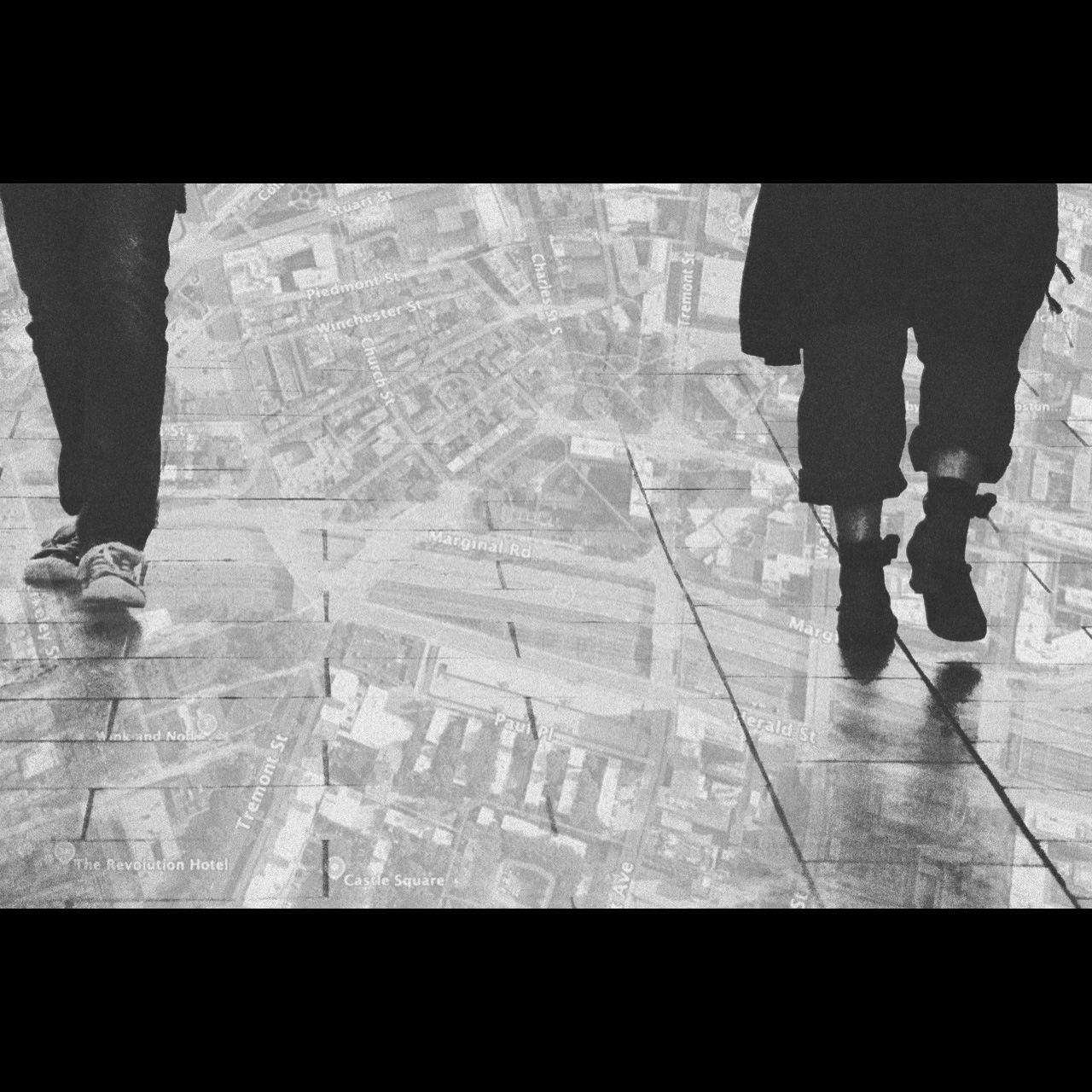
Path of Awareness – Sounding Chinatown, Part 1: Soundwalk / katrinem & Paula Martin Rivero and Chucho (Jesús) Ocampo
Path of Awareness is an artistic walking format that explores how space is experienced through conscious movement and listening. Developed for Chinatown in Boston, this edition responds to the neighborhood's layered architecture and the presence of Interstate 90, whose continuous infrastructural sound shapes the area's atmosphere.
Through a steady, moderate pace and deliberately open listening, participants expand their auditory field beyond the habitual filtering of everyday life. The walk invites attention to subtle acoustic shifts: reverberations between buildings, the masking and revealing of voices, the rhythm of traffic, and the sound of one's own footsteps meeting pavement and concrete. Shoes become instruments; walking becomes a dialogue with architecture.
The site-specific route turns the path itself into the destination. Thresholds—between quiet and noise, enclosure and exposure—emerge as lived spatial moments. Listening while walking reveals that infrastructure is not only seen but also heard, felt, and embodied.
Since 2012, more than 25 Path of Awareness works have been realized worldwide, including in Berlin,
Linz, New York, Tehran, Mexico City, and Marseille. Sounding Chinatown continues this evolving practice at a critical moment of urban transformation.
katrinem's artistic practice explores the relationships between sound, space, and movement, with walking and listening as fundamental acts. For over twenty years, she has investigated the walkability, acoustics, and atmospheres of urban and architectural environments through performative and installation-based works such as go your gait! and Path of Awareness. These projects reveal the rhythmic interplay of footsteps, spatial structures, and ambient sound.
Everyday life serves as the starting point for creative transformation in her work. Ordinary objects—such as brooms or shoes—are reimagined as instruments that intertwine movement and sound in projects like Andante, BesenBallett, and Raumspiel, often involving participatory elements and collective action in public space.
Her projects emerge from intensive site-specific research and interdisciplinary collaboration with artists, scientists, architects, and urban planners, inviting audiences to reconsider their habitual experience of space and discover the often-overlooked musicality of everyday movement and listening.
https://katrinem.de/
Paula Martin Rivero
is an artist and researcher exploring borders, language and technology. Paula holds a BFA and an MA from Universidad Complutense and an MFA in Fine Arts from Parsons School of Design. A Fulbright Scholar and La Caixa Fellow she is currently pursuing her PhD in Interdisciplinary Design and Media at Northeastern.
Chucho (Jesús) Ocampo is an artist and architect working with the incommensurability of planetary phenomena and experience. A partner at the art and architecture firm DeriveLab since 2013, he holds a master’s from MIT’s Art, Culture, and Technology (ACT) program.
WEDNESDAY April 29, 2-4pm
Time: Artist talk: April 29, 2-4pm
Place: Harvard Artlab, 140 N Harvard St, Boston, MA 02134
BOOK YOUR FREE TICKET
in partnership with
in collaboration with
/ Northeastern University
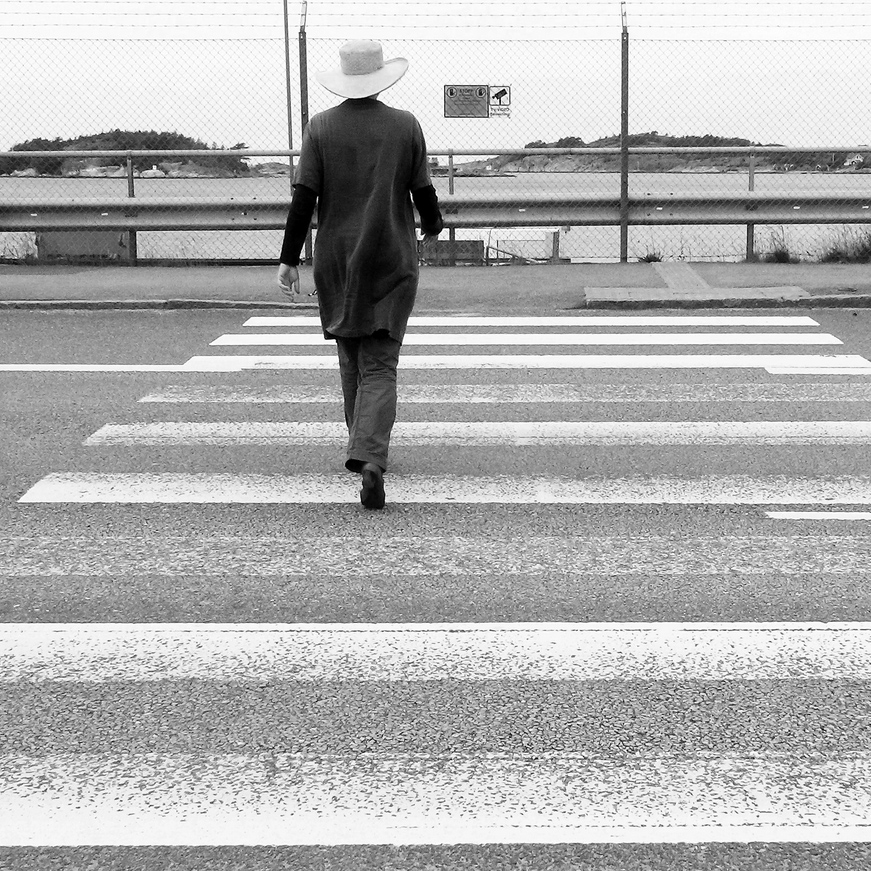
Path of Awareness – Sounding Chinatown, Part 2: Artist Talk / katrinem & Paula Martin Rivero and Chucho (Jesús) Ocampo
Path of Awareness is an artistic walking format that explores how space is experienced through conscious movement and listening. Developed for Chinatown in Boston, this edition responds to the neighborhood's layered architecture and the presence of Interstate 90, whose continuous infrastructural sound shapes the area's atmosphere.
Through a steady, moderate pace and deliberately open listening, participants expand their auditory field beyond the habitual filtering of everyday life. The walk invites attention to subtle acoustic shifts: reverberations between buildings, the masking and revealing of voices, the rhythm of traffic, and the sound of one's own footsteps meeting pavement and concrete. Shoes become instruments; walking becomes a dialogue with architecture.
The site-specific route turns the path itself into the destination. Thresholds—between quiet and noise, enclosure and exposure—emerge as lived spatial moments. Listening while walking reveals that infrastructure is not only seen but also heard, felt, and embodied.
Since 2012, more than 25 Path of Awareness works have been realized worldwide, including in Berlin, Linz, New York, Tehran, Mexico City, and Marseille. Sounding Chinatown continues this evolving practice at a critical moment of urban transformation.
katrinem's artistic practice explores the relationships between sound, space, and movement, with walking and listening as fundamental acts. For over twenty years, she has investigated the walkability, acoustics, and atmospheres of urban and architectural environments through performative and installation-based works such as go your gait! and Path of Awareness. These projects reveal the rhythmic interplay of footsteps, spatial structures, and ambient sound.
Everyday life serves as the starting point for creative transformation in her work. Ordinary objects—such as brooms or shoes—are reimagined as instruments that intertwine movement and sound in projects like Andante, BesenBallett, and Raumspiel, often involving participatory elements and collective action in public space.
Her projects emerge from intensive site-specific research and interdisciplinary collaboration with artists, scientists, architects, and urban planners, inviting audiences to reconsider their habitual experience of space and discover the often-overlooked musicality of everyday movement and listening.
https://katrinem.de/
Paula Martin Rivero
is an artist and researcher exploring borders, language and technology. Paula holds a BFA and an MA from Universidad Complutense and an MFA in Fine Arts from Parsons School of Design. A Fulbright Scholar and La Caixa Fellow she is currently pursuing her PhD in Interdisciplinary Design and Media at Northeastern.
Chucho (Jesús) Ocampo is an artist and architect working with the incommensurability of planetary phenomena and experience. A partner at the art and architecture firm DeriveLab since 2013, he holds a master’s from MIT’s Art, Culture, and Technology (ACT) program.
THURSDAY April 30, 9:30-11:30am
Time: April 30, 9:30am, departure on a scheduled shuttle bus to Deer Island (limited seats).
Otherwise, meeting at 10am, Deer Island - MWRA Gate
Departure back to GSD: 11:30am
Meeting point: GSD, Gund Hall, 48 Quincy St.
in partnership with
and Loeb Fellowship
BOOK YOUR FREE TICKET (limited)
Besides the walk along the island's shore, there are limited spots for a walk inside the water treatment facility on the island.
FULLY BOOKED
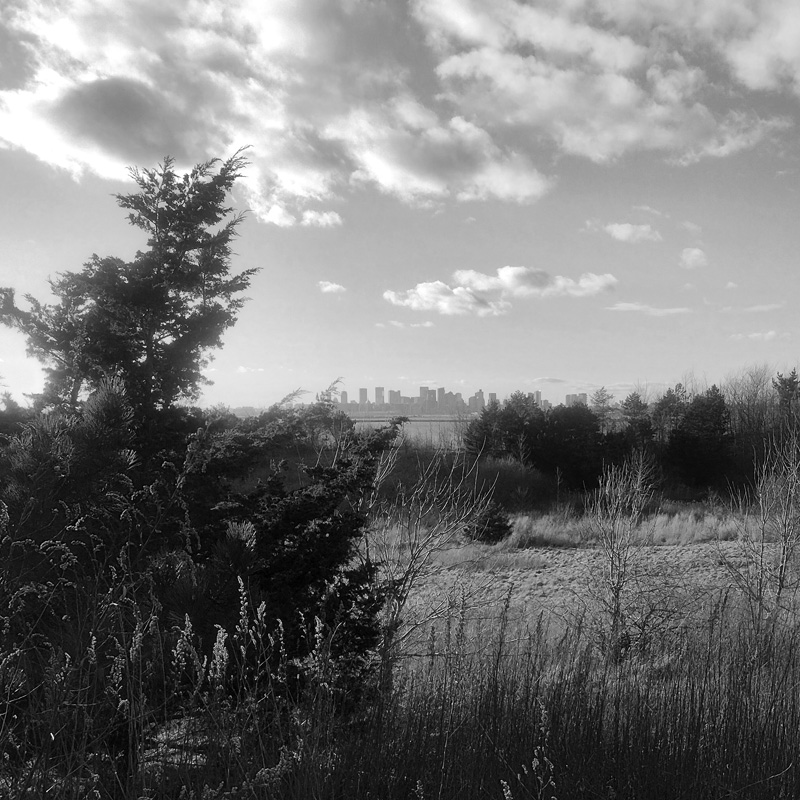
Since Time Immemorial: Deer Island is Native Space / Elizabeth Solomon & Sarah Kanouse
This soundwalk tunes the ears and the heart toward the past, present, and future of Native Space on Deer Island. Formed by materials deposited by retreating glaciers more than 10,000 years ago, the island was a beloved summer home of the Massachusett for thousands of years. Today, it is better known as the site of Boston's wastewater treatment plant—and as a place of imprisonment and death for hundreds of peaceful 'praying Indians' during Metacom's Rebellion (King Philip's War). What aspects of the island's interconnected geologic and human histories can be heard, felt, and touched today? Massachusett elder Elizabeth Solomon and artist Sarah Kanouse lead a 45-minute walk that encourages attendees to connect with and listen to the many currently obscured stories the island has to tell.
Elizabeth Solomon is an elder and officer of the Massachusett Tribe at Ponkapoag. She speaks frequently about local Indigenous histories and issues and has a long-standing commitment to the preservation of cultural heritage and community building that she brings to both her paid and volunteer work. In this capacity, Ms. Solomon works with varied institutions as they navigate developing meaningful relationships with her community and serves on multiple government and private advisory and management boards including those for the Boston Harbor Islands National Recreation Area and the Commonwealth of Massachusetts' Seal, Flag, and Motto Advisory Commission. Ms. Solomon has a master's degree in museum studies and frequently works with museums and historic sites to help bring the voices and stories of Native communities and others that are currently underrepresented in museum exhibits and public history programs to the forefront.
Sarah Kanouse is an interdisciplinary artist and writer examining the political ecology of landscape and space. Migrating between video, sound, and performance, her expanded nonfiction media projects shift the visual dimension of landscape to allow hidden stories of environmental and social transformation to emerge. Her solo and collaborative creative work—most notably with Compass and the National Toxic Land/Labor Conservation Service—has been presented through the Haus der Kulturen der Welt, Documenta 13, the Museum of Contemporary Art-Chicago, Krannert Art Museum, Cooper Union, Smart Museum, and numerous academic and artist-run venues. Her writings on landscape, ecology and contemporary art have appeared in Acme, Leonardo, Parallax, and Art Journal and numerous edited volumes. A 2019-2020 fellow at the Rachel Carson Center at Ludwig Maximilians Universität, she is Associate Professor of Media Arts in the Department of Art + Design at Northeastern University.
https://readysubjects.org/portfolio/
FRIDAY May 1, 5-6:30pm and
May 2, 11am-12:30pm (RESCHEDULED:TBC)
Time: May 1: 5pm-6pm, May 2: 11am-12pm,
Duration: 60 mins, plus optional after-gathering at Longfellow Garden
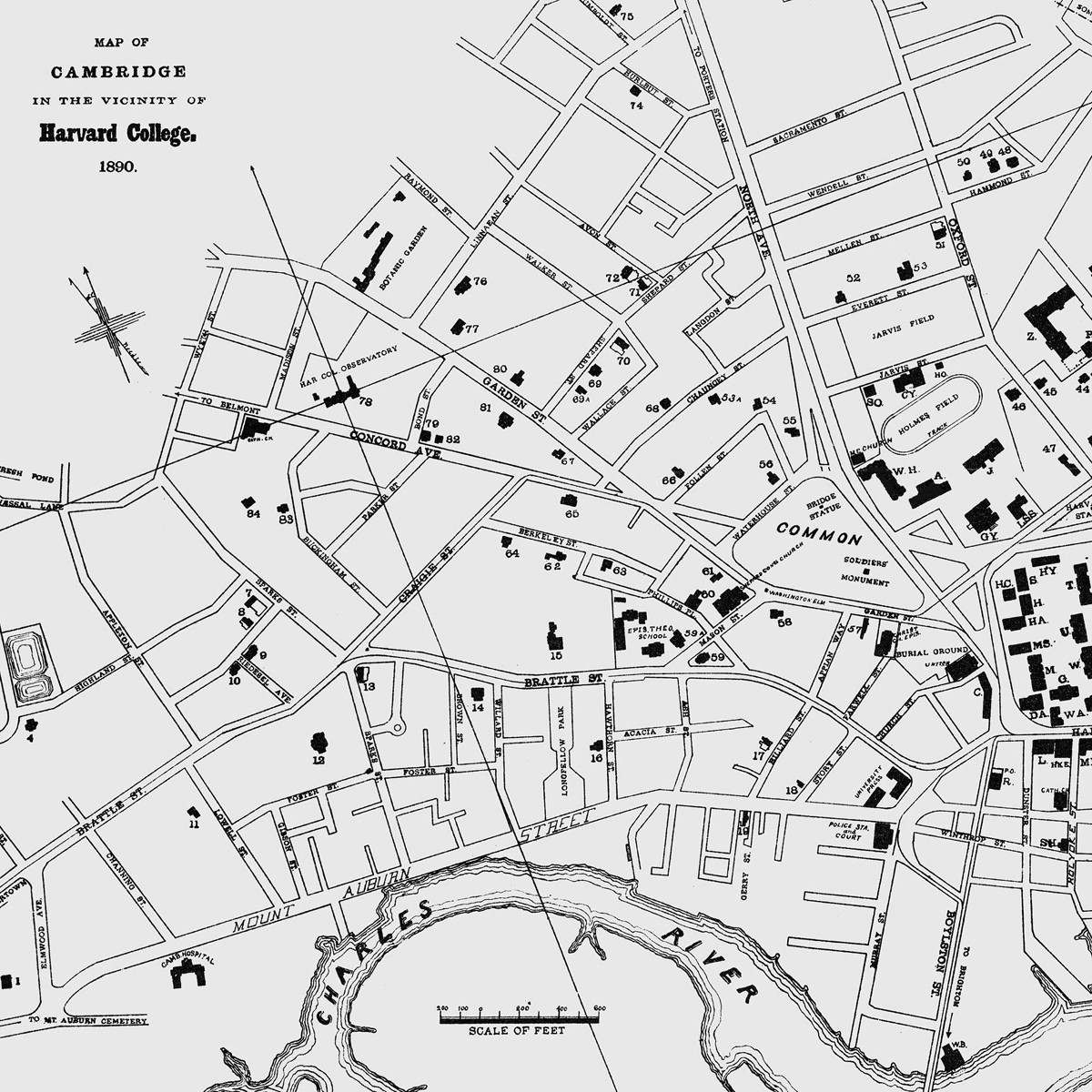
Meeting point: Radcliffe Yard sunken garden (corner of Appian Way & Concord Ave.)
May 1, 5pm walk: BOOK YOUR FREE TICKET
May 2, 11am walk: BOOK YOUR FREE TICKET
T/HITHER: A Literary Soundwalk / Christina Davis
T/HITHER is an invitation to explore the literary history of West Cambridge and the presence of a plurality of times. While no tour could ever convey the area's total artistic activity, the 15 featured sites on our walk—including the dwelling-places of Elizabeth Bishop, Robert Creeley, Robert Frost, Vladimir Nabokov, and Adrienne Rich—will provide you with what Ashbery called "the mooring of starting out." As you walk through a century of literary soundings, you will enter a temporal sensorium, where history brushes against eternity—a sonic landscape in which the poet's "I" is the site of entrance into a "a psychic flow older than our own conscious memories and broader than our own personality." Bring a notebook for your own observations, as you meditate on how the contemporary soundscape mingles with these inimitable voices from the archive. We'll end our tour at Longfellow's Garden and release our own words into "the world-breeze."
Christina Davis is a poet and the Curator of the Woodberry Poetry Room, Harvard University, one of the earliest and largest archives of literary recordings in the United States. Her work has appeared in the American Poetry Review, Boston Review, New York Review of Books, The New Republic, and Poetry. This walk is a part of her on-going LITMap project.
SATURDAY May 2, 2026, 8am-6pm
Time: 8am-6pm
Place: Smith Campus Center, 1350 Massachusetts Avenue, Cambridge, MA 02138
in partnership with Harvard Commons Spaces
Open event / Drop in
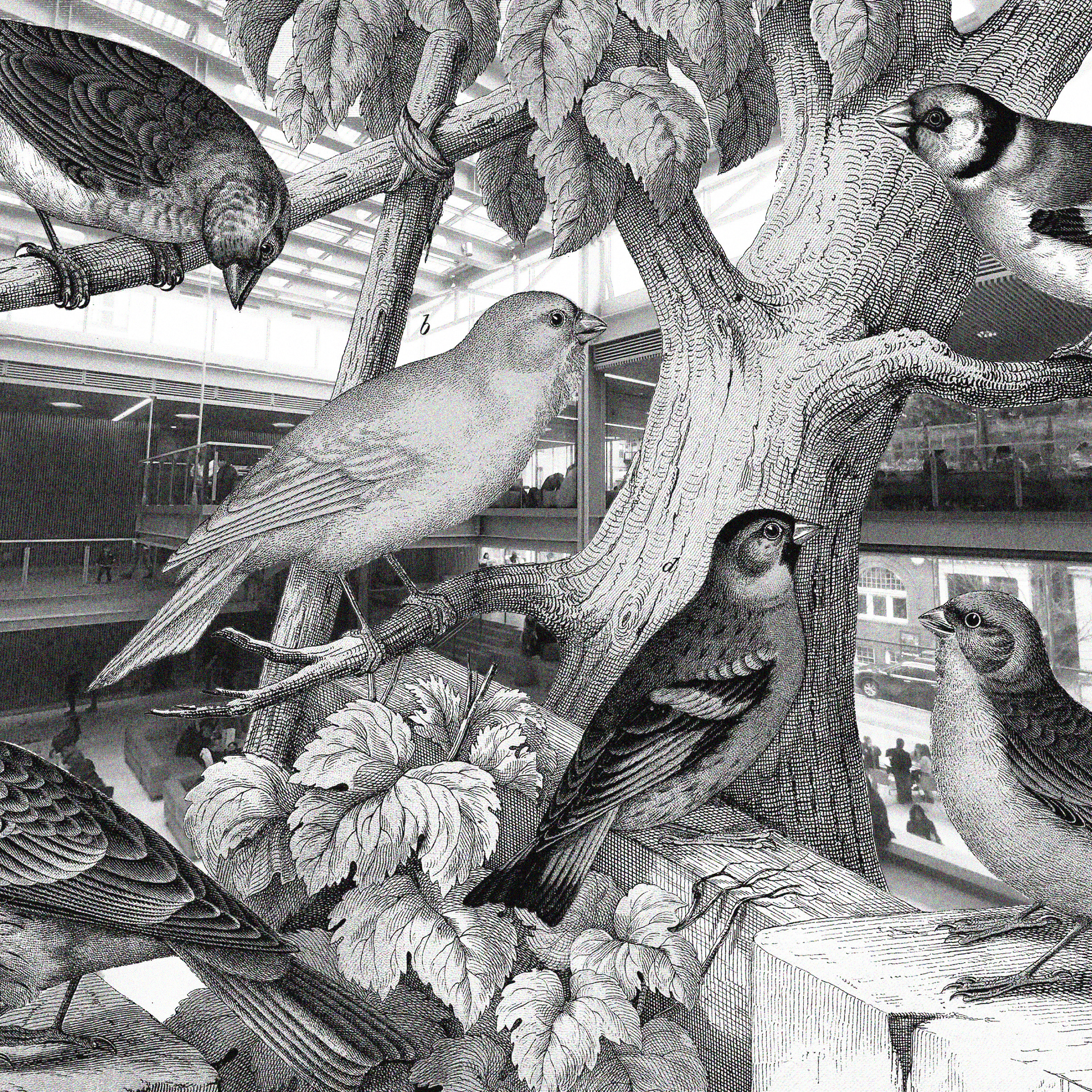
Reveil: International Dawn Chorus Day / Multiple Artists
Reveil is a 24+1 hour live audio broadcast that circles the globe, tracking the sunrise on International Dawn Chorus Day (first weekend of May).
Produced by Soundcamp and the Acoustic Commons network, it features live streams of morning birdsong from diverse,
worldwide locations, airing on Resonance Extra and Wave Farm. This year, the stream will be broadcast through the sound system of Harvard Commons at the Smith Campus Center.
Harvard Commons is a multi-level, open-plan, and flexible gathering space located on the first and second floors of the center in Cambridge.
It serves as a central hub for the Harvard community to study, dine, and socialize, featuring varied seating, food vendors, and a "front door" to the university.
Coordinators: Jacek Smolicki (WFoS), Bree Edwards (Artlab), Grant Smith (Acoustic Commons), Julie Crites, Megan LaFoschia, and
Lara Adams (Harvard Commons Spaces)
SATURDAY May 2, 2026, ~5am
Time: ~5-8am
Place: Harvard Arboretum and via Reveil radio broadcast
in collaboration with
Soundcamp and the Acoustic Commons network
and the Arnold Arboretum of Harvard University
Reveil: International Dawn Chorus Day
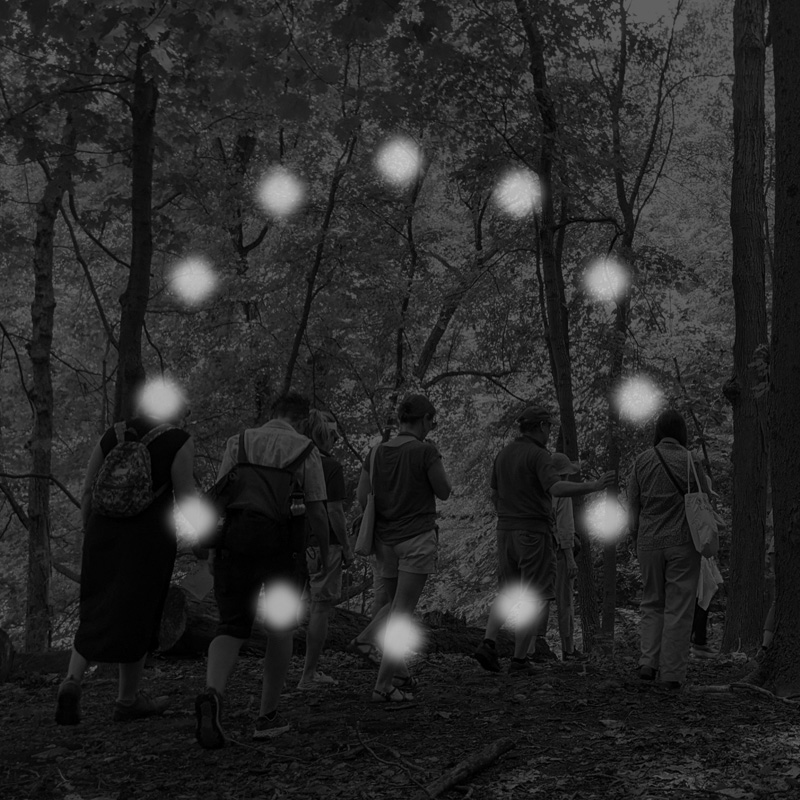
Reveil is a 24+1 hour live audio broadcast that circles the globe, tracking the sunrise on International Dawn Chorus Day (first weekend of May).
Produced by Soundcamp and the Acoustic Commons network, it features live streams of morning birdsong from diverse,
worldwide locations, airing on Resonance Extra and Wave Farm.
Soundscapes of Harvard Arboretum's avian life at dawn will join this year's stream, starting at around 5:38, the time of sunrise in the Boston area.
Using specialized stream box installed in-situ, people around the world will be able to connect with the soundscapes of Arboretum by listening to the stream.
Completing the timeframe of the festival initiated at dusk, this event will mark the end of the festival, leaving the following day as an open room for everyone to engage with listening to the surrounding world on their own terms.
Harvard Commons is a multi-level, open-plan, and flexible gathering space located on the first and second floors of the center in Cambridge.
It serves as a central hub for the Harvard community to study, dine, and socialize, featuring varied seating, food vendors, and a "front door" to the university.
Soundcamp cooperative are an arts cooperative based at Stave Hill Ecological Park in Rotherhithe and Work Shop 1 in Loughborough Junction, with members in Glasgow, Berlin, Yorkshire, Crete and The Netherlands. We are interested in diy infrastructures that can move live sounds between places and situations, and give attention to less heard human and non-human communities. Our work appears as live transmissions, workshops, sound devices and events.
Current projects include the annual Soundcamp / REVEIL event and broadcast over dawn chorus day each year; an open work shop and radio station at Work Shop 1, LJ:Works, South London; the activist radio series: Radio With Palestine, in collaboration with Radio al Hara; and a sister organisation in Catalunya with Barcelona-based artist pantea (So).
Coordinators: Jacek Smolicki (WFoS), John Pax (Shelemay Sound Lab), Grant Smith (Acoustic Commons) in collaboration with Harvard Arboretum.